
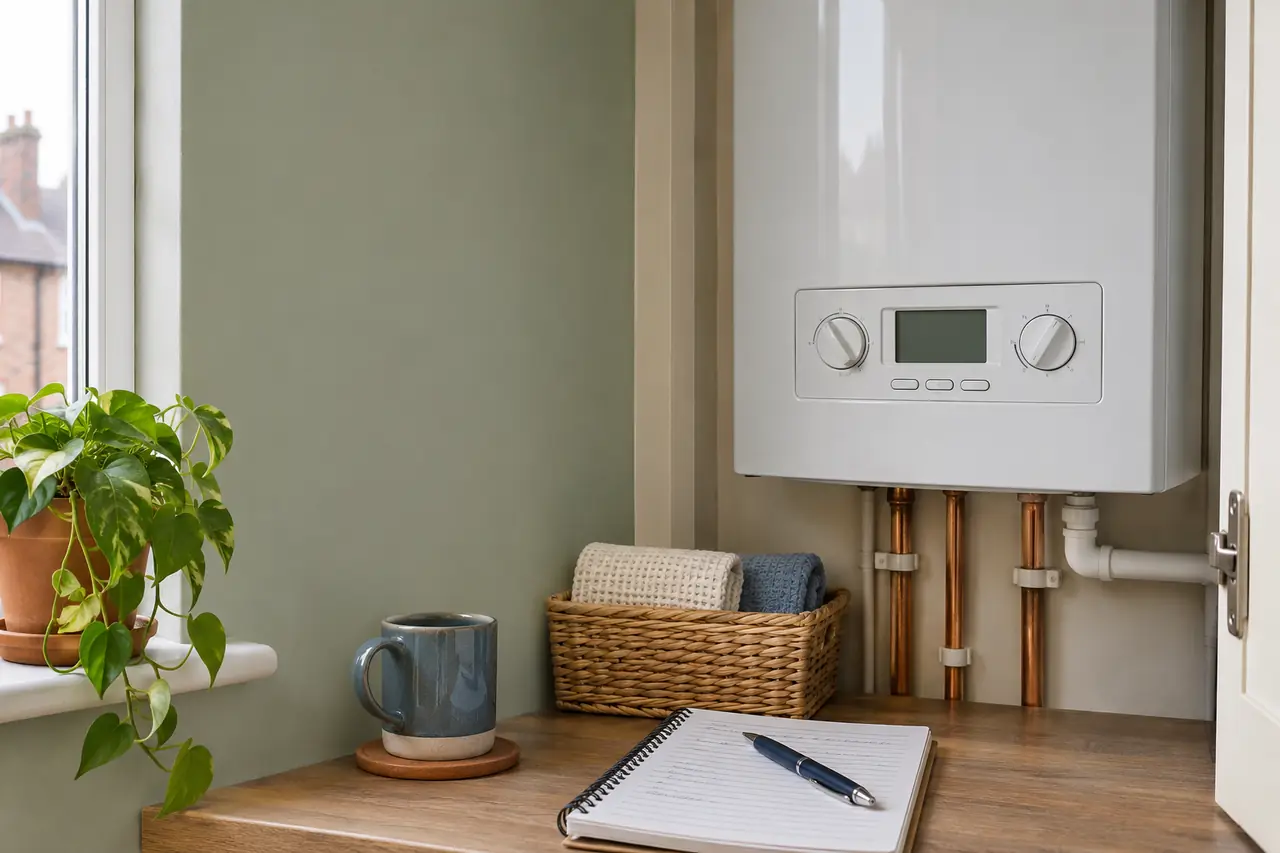
Check what the boiler was being asked to do
Start with the ordinary controls and display. Note whether central heating was scheduled, a hot tap was running or no demand was obvious. Then log when the burner indicator appears and disappears for a few cycles. Some boilers have a hot-water preheat feature, and a pump or fan can continue after the burner stops.
A report like “Heating on at 07:00, no hot tap in use, burner icon on and off three times in ten minutes, front room still cold” is much more useful to an engineer than “the boiler is noisy”. If the display shows a code, photograph it and record the model without opening anything.
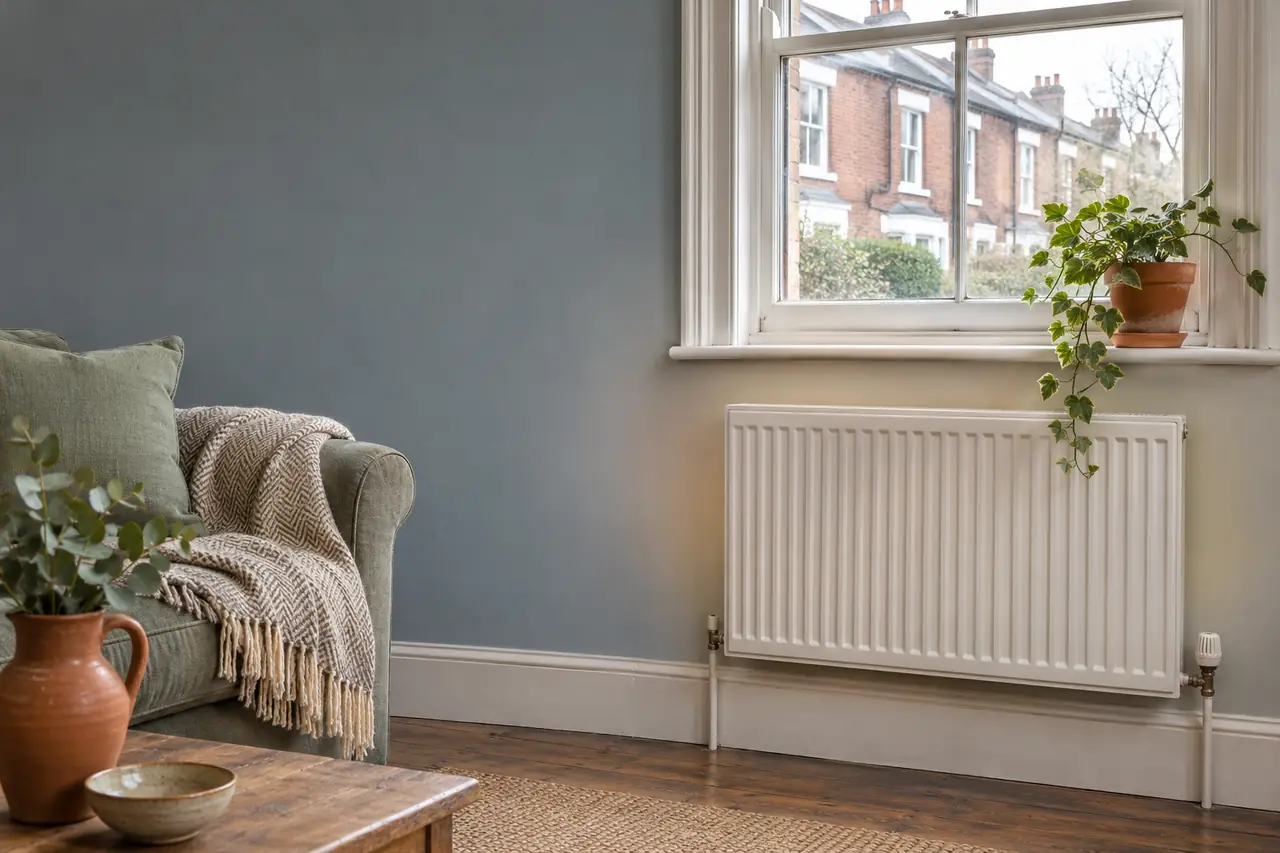
What the pattern might change
A single short firing as the house approaches temperature may come with normal control behaviour. Frequent cycling together with loss of heat or hot water, persistent error codes or recurring lockouts is reason to book a check. Tell the engineer if the issue began just after work on the system or after controls were changed.
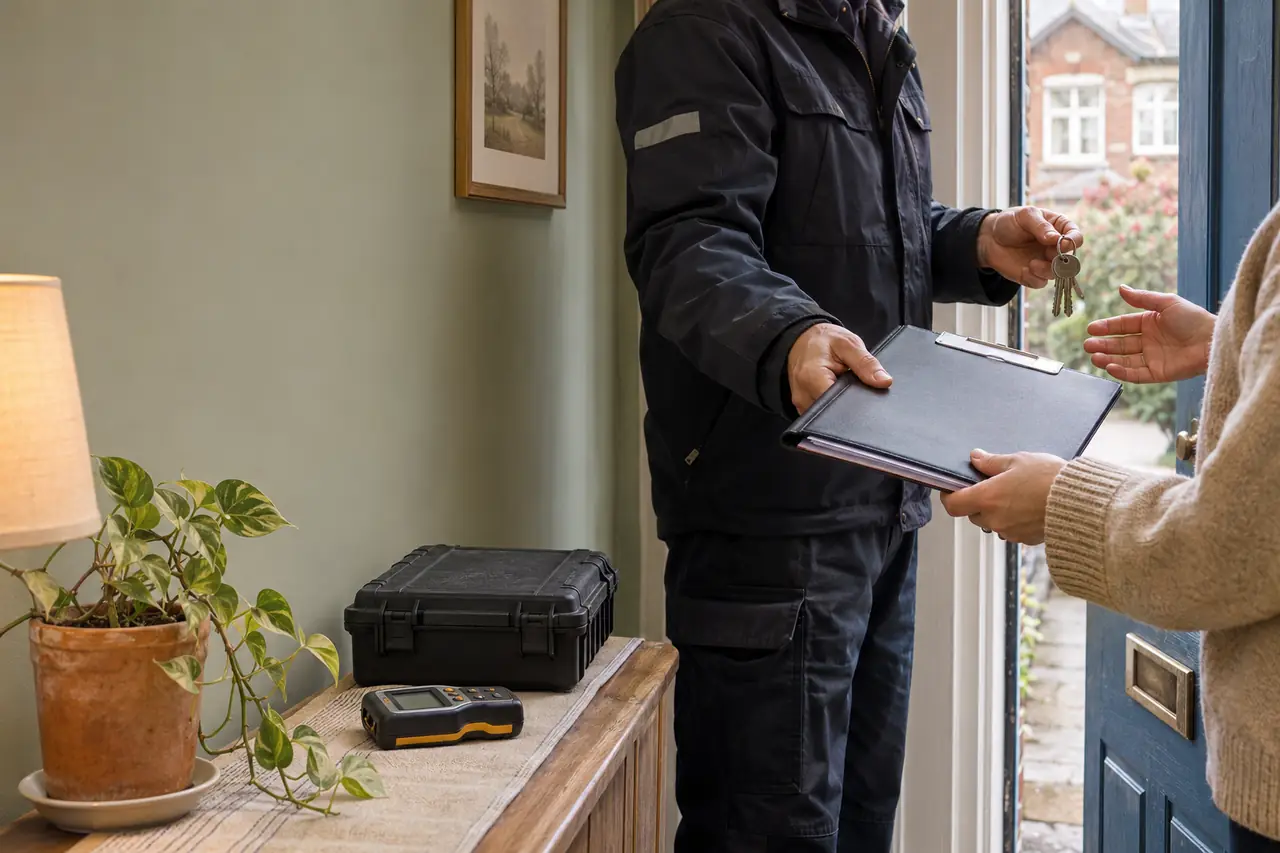
Ask the engineer whether the checks will cover controls, circulation and heat demand. Gas work and internal boiler checks require an appropriately qualified Gas Safe registered engineer. Avoid repeated resets while a fault persists.
When to stop recording
If there is a gas smell or a carbon monoxide alarm, get outside and call the gas emergency service from there. In Great Britain the number is 0800 111 999. In Northern Ireland it is 0800 002 001. Call 999 if anyone has serious symptoms or there is an immediate threat to life. Seek urgent medical advice for suspected carbon monoxide exposure.
Common questions
Does repeated cycling mean I need a new boiler?
The cause could be associated with controls, heat demand, circulation or the appliance. Take the timing and code to the engineer and ask what they have confirmed before choosing a repair or replacement.
Should I include a pressure reading?
If you can read an external display or gauge safely, share its value and when you saw it. The acceptable range depends on the system manual and whether the system was hot or cold.
Which is the next step if only hot water is affected?
Tell the engineer what the boiler does when an ordinary tap is opened and whether heating still works. Record the timing at one tap and avoid altering internal settings.
What if I hear an alarm and do not smell gas?
Treat a carbon monoxide alarm seriously. Go outside and follow the emergency instructions. Carbon monoxide has no smell.