
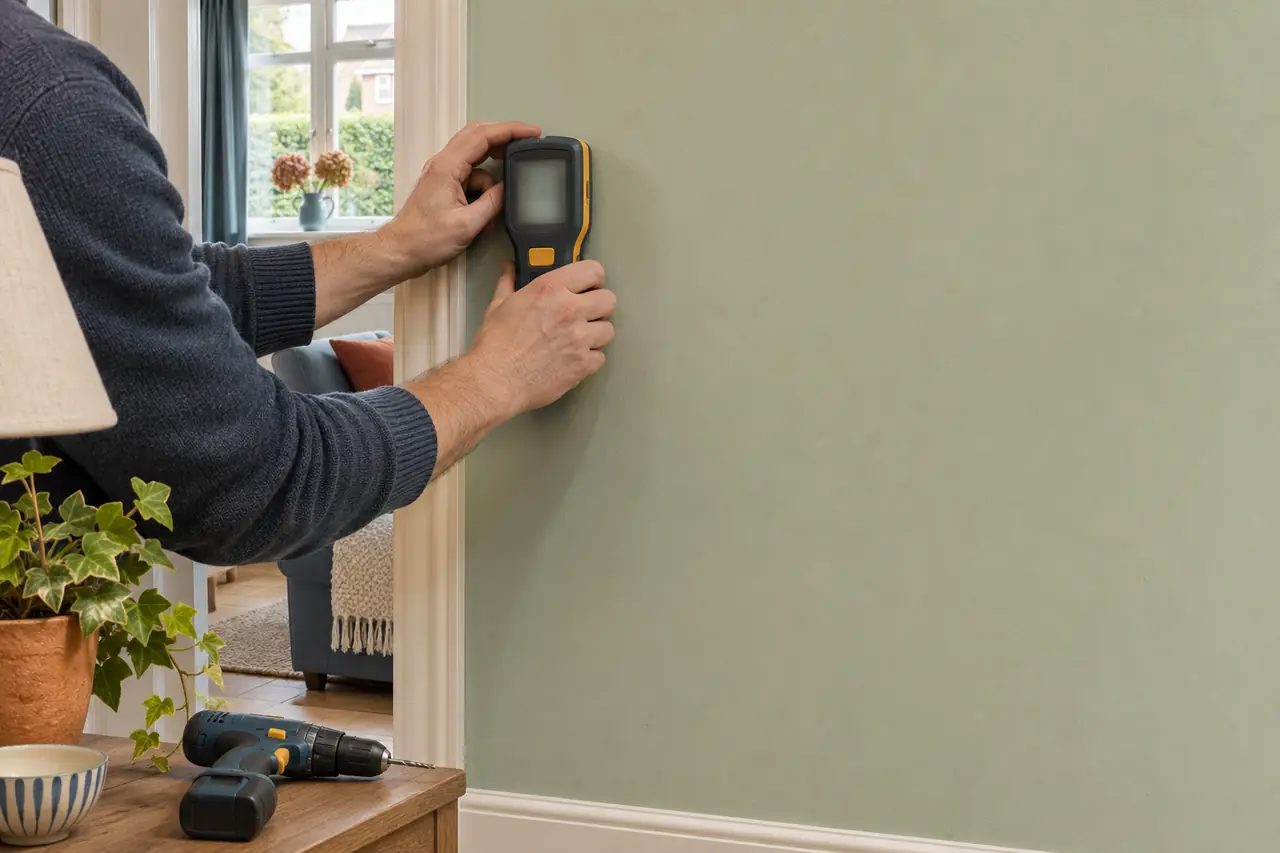
List what could be behind the spot
Check both sides of the wall and the areas above and below the proposed fixing. A socket, switch, radiator, shower or sink provides a reason to confirm how a cable or pipe is routed. Services can be concealed or displaced from the route you expect. Plans and scan results may leave gaps, especially with plastic pipes, foil-backed boards and thick finishes.
If a signal repeats across the proposed position, stop and ask an appropriate tradesperson to establish the route. Treat conflicting results the same way. Leave suspected asbestos-containing material undisturbed. In Great Britain it can be present in buildings built or refurbished before 2000.
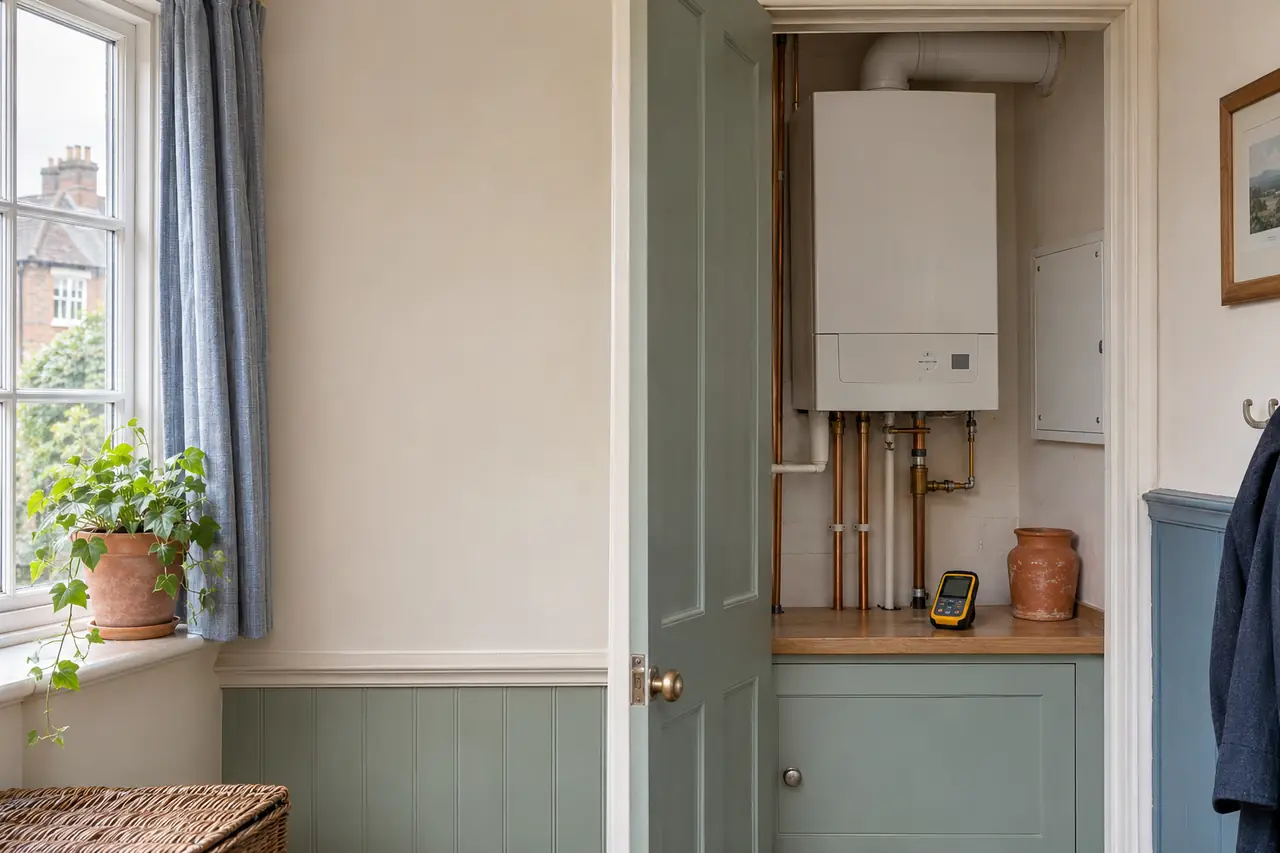
Write down the load and the wall type
Include the bracket, TV or shelf and the weight it will carry. An arm that swings away from the wall adds leverage. A shelf that will carry books can be much heavier in use than an empty shelf. Check the fitting instructions for the specified substrate, fixing type and load. Use an installer when the material, fixing or load is uncertain.
Painted plasterboard, masonry and dot-and-dab finishes need different fixation. If the wall construction is unknown or you rent, confirm the make-up and any permission before deciding where or how to attach anything.
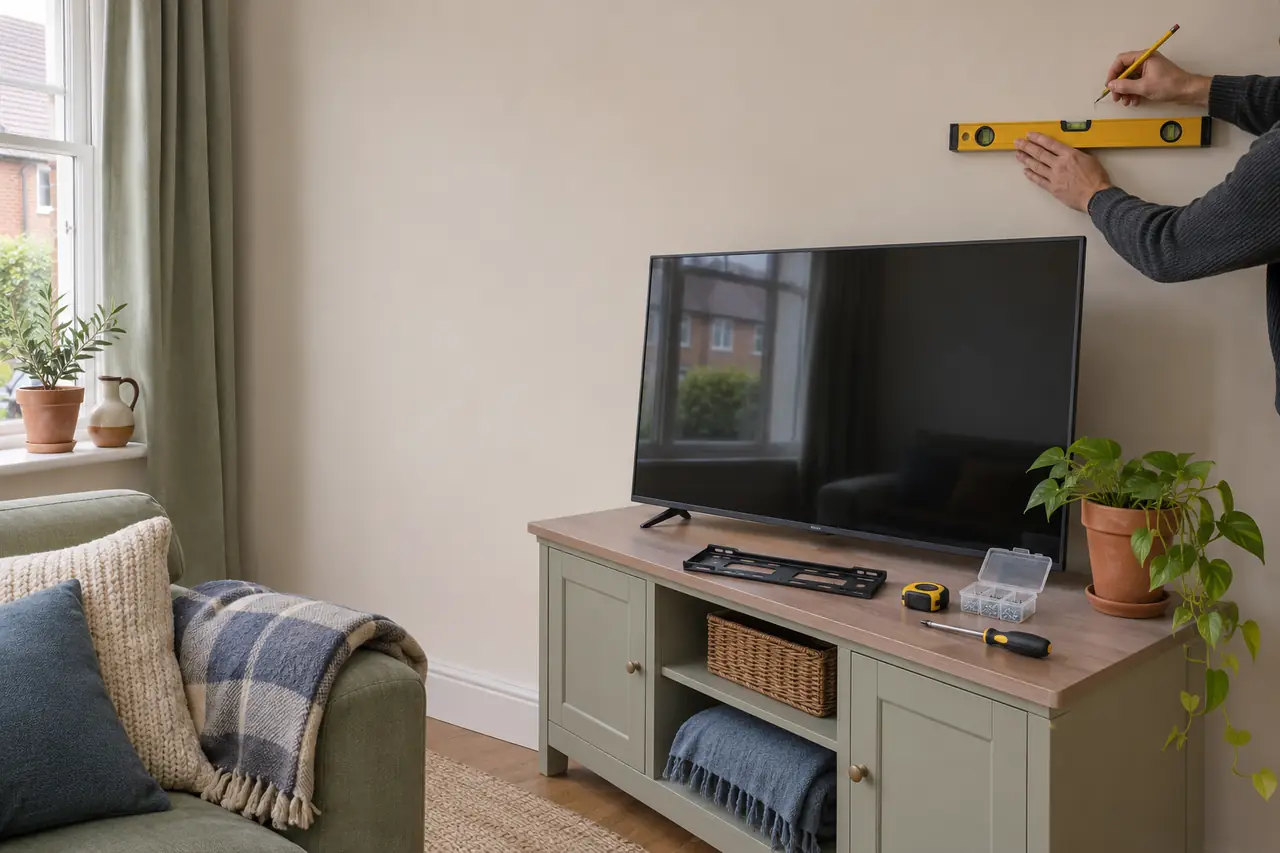
When to ask for help
Send an installer one wide picture with the proposed mounting area marked, a photo of the bracket model and any conflicting readings. Say if there is a socket or radiator on either side of the wall. Ask how they will confirm the substrate and route before they quote for the fitting.
Common questions
My scanner shows no live wire. Does that make the point safe?
A blank reading means the device did not report a signal under those conditions. Confirm services using more information before making a hole. Ask an electrician if the cable route remains uncertain.
Why does the scanner mark metal across most of the wall?
Mesh, foil backing, metal studs and other materials can produce broad signals. Check the manual and record the pattern, then ask an installer to verify the wall if the readings are inconclusive.
Can I drill a small test hole to find out?
A shallow hole can still disturb a cable, pipe or hazardous material. Resolve the uncertainty first.
What weight should I enter for a shelf or TV?
Use the combined in-use load including the bracket or shelf. Tell the installer if the bracket extends, the shelf might be loaded unevenly or someone could pull on it.