
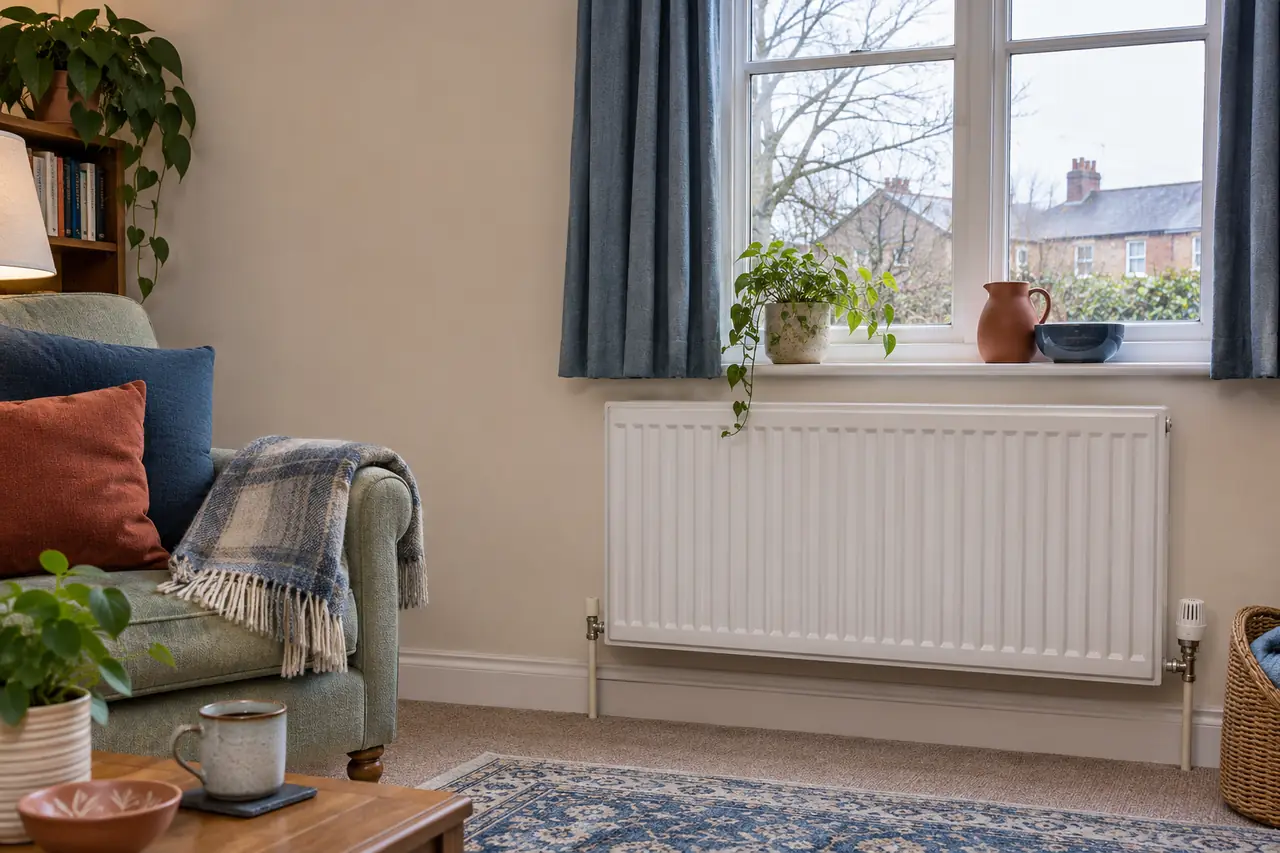
Start with a timed room reading
Put a room thermometer at about the height where you sit, away from a window, direct sun and the radiator. Log it when the heating starts and again 30 to 60 minutes later. Do the same in a room that warms normally, at the same time if possible. Write down the outdoor temperature, time of day and how long the heating had already been running.
A cold bedroom that warms after a longer session may need a different conversation about timing from one that stays cold while the rest of the floor warms. Also note whether the main thermostat is in a sunny or warmer room and whether it stops calling for heat early.
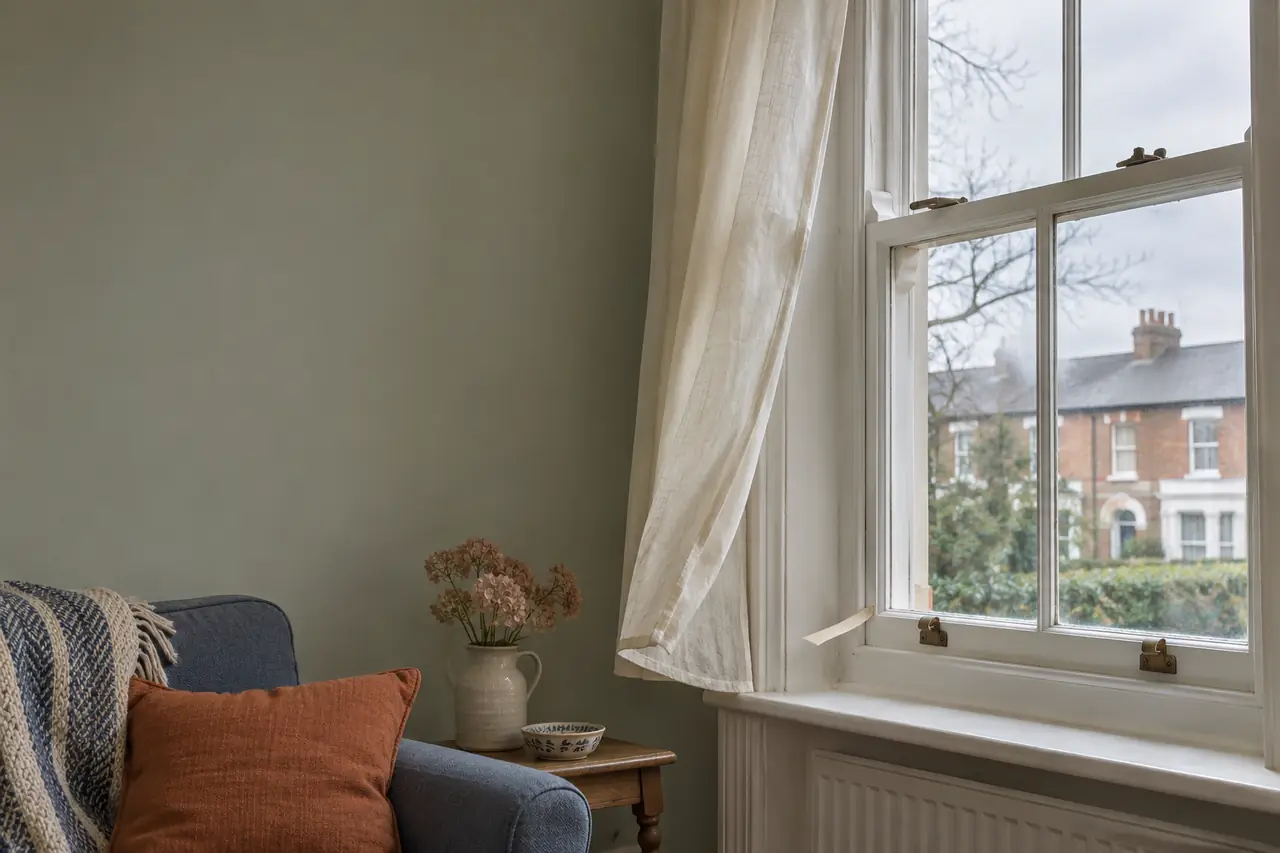
Check the path from radiator to room
Look for a sofa or heavy curtain covering the panel and check whether the radiator seems broadly warm during a call for heat. Use observation rather than touching a very hot surface. If several radiators stay cool or become uneven during the same heating period, tell the heating engineer about the pattern across rooms.
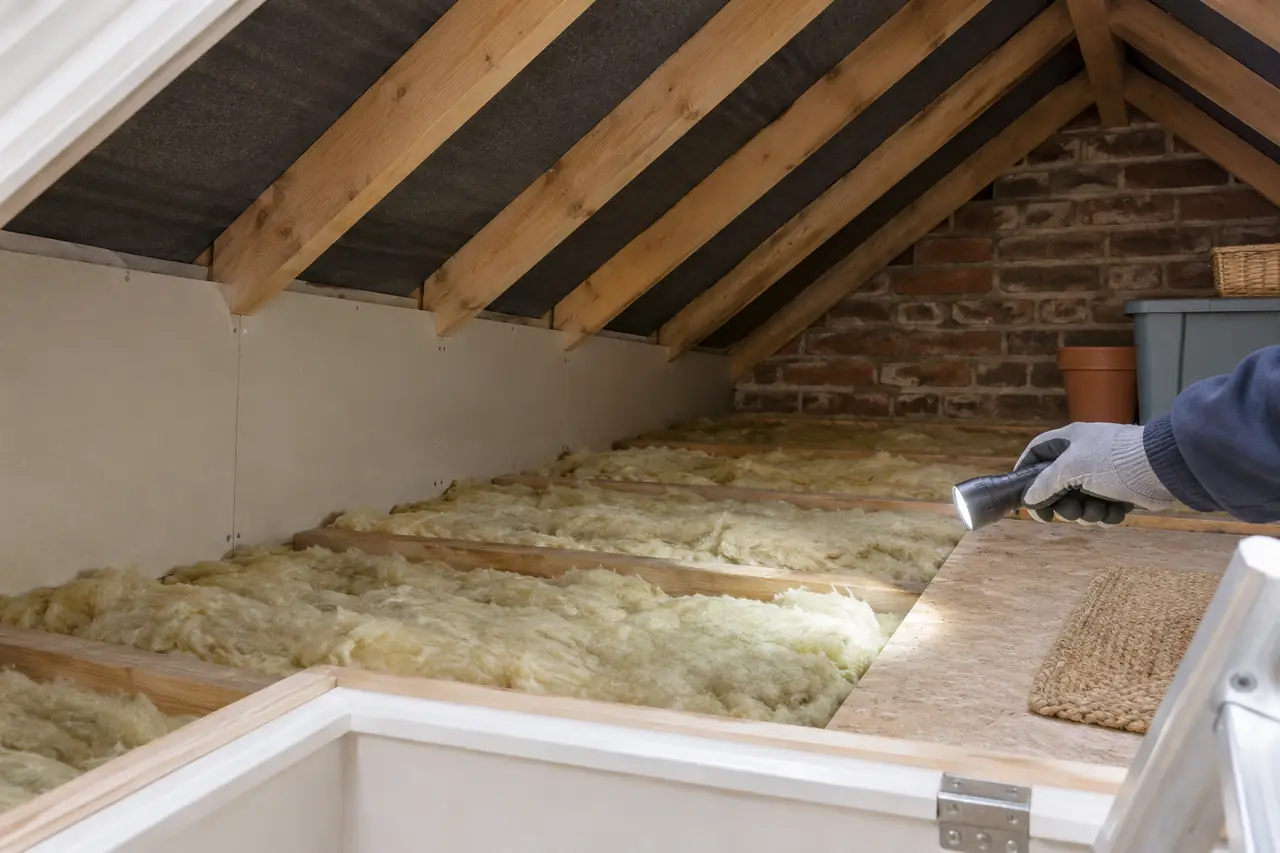
If the radiator is warm and the room is draughty, record where you feel the draught and whether it changes in windy weather. Some openings, including purpose-provided vents and air supply for appliances, need to stay open. An upstairs room under an unheated loft or a corner room with two external walls may need a heat-loss assessment.
What to put in the engineer's brief
Send the starting and later temperature, schedule, radiator position, room size and same-time comparison. Ask whether to assess controls, radiator output or the room’s heat loss before anyone recommends a larger radiator. Ask how the proposed change will be tested.
Common questions
Will turning the thermostat up make this room warm up faster?
It usually changes the target. On a typical system it can make the heating run longer, while room warm-up depends on the radiator, flow, heat loss and controls.
Do I need to bleed the radiator?
A cold top and a hot bottom can point to trapped air. If the panel is already warm across its face, check the room, schedule and draughts first. Follow your system instructions or ask the person maintaining it.
Why is it colder by the window than by the door?
An external surface or air leak can change comfort close to the window. Compare with the same heating and curtain position, then record where you can feel air moving.
What if the heating fails completely in rented housing?
Report the loss promptly and say whether hot water is affected and whether anyone is particularly vulnerable to cold. Keep the message and ask the landlord or agent for the repair timetable.